
Construction Reporting Software in USA: What to Check Before You Buy
Most U.S. contractors evaluating construction reporting software in USA are solving the wrong problem. The complaint is almost always that two reports disagree. The assumption is that better software will fix it. It won’t, because the reports disagree about definitions rather than data, and no product will choose your definitions for you. This covers what to settle first, what your existing systems already do, and when a genuine reporting layer is actually justified.

Why the U.S. market changes this decision
Anyone comparing construction reporting software in USA faces requirements that simply don’t apply in other markets. Certified payroll and prevailing wage reporting. AIA G702 and G703 pay applications. Retainage rules that vary by state and sometimes by contract phase. Multi-state burden and tax that must not be averaged. Any product that can’t produce those natively will need custom work. Establish that before a demo rather than in month four of an implementation.
Settle these five before evaluating anything
Two reports disagree because two definitions disagree. Work through these and a meaningful number of firms discover they didn’t have a software problem.
Does committed cost include pending change orders? Most contractors need two measures rather than one answer.
Is cost to date posted or accrued? A report built on posted cost always looks better than reality mid-month.
Is percent complete cost-based, units-based, or set by the project manager?
What is the period cutoff, and does it match the trial balance?
Who owns the number when a report and the ledger disagree?
Every one of those is a business decision rather than a technical one. No product resolves them for you, and buying software before answering them just means the software picks for you.
The conversation nobody wants to have
Settling those definitions usually surfaces a disagreement between finance and operations that has been comfortable precisely because it stayed implicit. Operations wants percent complete set by the PM, because the PM knows the job. Finance wants it cost-based, because it’s auditable. Both positions are reasonable. Somebody has to decide, in writing, and it should be the CFO. That meeting is an hour and it’s worth more than most software evaluations.
What your ERP already does
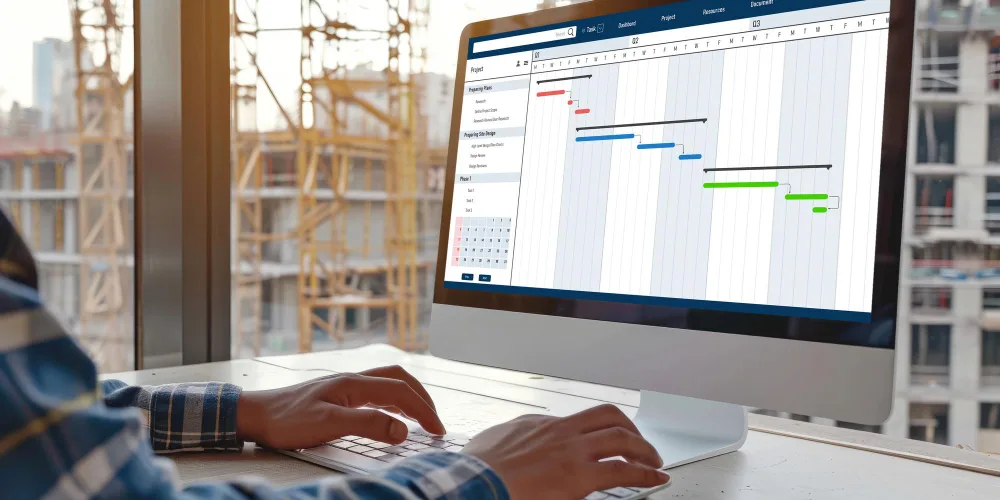
More than most contractors use. Before buying construction reporting software in USA, that is worth an hour. Acumatica, Sage Intacct Construction, CMiC, Foundation and Jonas all include job cost reporting, WIP schedules, committed cost tracking and forecast entry. Most firms we assess are using perhaps half of it. Before buying anything, have someone spend a day in your ERP’s reporting module with the vendor documentation open. It’s the cheapest step in this whole process and it occasionally ends the project.
When a reporting layer is genuinely justified
Three situations justify buying construction reporting software in USA, and you should be able to point at one.
Three or more systems have to agree on the same number. Your definitions are settled but your ERP can’t express them. Or you need forecast history the ERP doesn’t retain.
If none of those apply, you have a configuration or training problem wearing a software costume.
The five questions that separate products
Applied to any construction reporting software in USA shortlist, these will narrow it faster than a feature comparison.
Can it read every system you actually run, or only the ones on a partner list?
Does it drill through to transaction level? The first question after any variance is which invoice caused it.
Can it retain a forecast snapshot per period? Without history you cannot show margin movement.
Who builds a new report, and how long does it take? If every change is a vendor ticket, reporting stops evolving.
What happens to your history if you leave?
The third one eliminates more products than the rest combined. Most reporting tools read current state and retain nothing, which makes prior periods irreproducible the moment anyone revises a forecast.
Why forecast snapshotting matters so much
Estimated cost at completion is a judgment, and judgments change. That’s fine and expected. But if your reporting reads the current forecast live, then last month’s report changes retroactively every time a PM updates a number. You lose the ability to say what you believed in March, which is exactly what you need when a job goes wrong. Start snapshotting now, whatever you decide about software. That history cannot be recreated later and it costs nothing to begin.

Build or buy
Packaged construction analytics products arrive with construction logic already built. That’s a genuine advantage and the main argument for buying. Buy if you have one main ERP and nobody internally to own a data platform. Build if three or more systems must agree, or if your definitions are unusual enough that a packaged product will fight you. The honest tiebreaker is staffing. A built solution needs an owner, permanently. If you can’t name that person, buy.
What good looks like
Job cost and forecast refreshed nightly, tying to the ledger with no manual adjustment.
Drill-through from any figure to the transactions behind it.
Margin movement since prior period as a standing column.
WIP calculated exactly the way the controller calculates it.
Certified payroll and AIA billing produced without a workaround.
Two to four days recovered from the monthly close.
A realistic sequence
A sensible evaluation of construction reporting software in USA runs in this order, and steps one to four cost nothing.
Settle the five definitions in writing. One page, signed off by finance and operations.
Audit what your ERP already reports. Most firms find unused capability here.
Identify which of your ten most-used reports need more than one system. If fewer than three, do not buy a platform.
Snapshot forecasts every period starting now, whatever you decide.
Only then evaluate products, against your actual reports rather than a feature matrix.
Where Proxsoft fits
We get asked to shortlist construction reporting software in USA fairly often and we start by asking which reports disagree and why. A reasonable share of those conversations end with a definitions workshop and no purchase, which is a worse outcome for us and a better one for the client. See also our power bi dashboards for construction and construction ERP solutions work. If you want a straight view on whether this is a software problem or a definitions problem, talk to our team.
Frequently Asked Questions
What should I look for in construction reporting software in USA?
Beyond the standard checks, U.S. contractors need certified payroll and prevailing wage reporting, AIA G702 and G703 pay applications, retainage handling that varies by state, and multi-state burden that is not averaged.
Do I need reporting software if I already have an ERP?
Often not. Acumatica, Sage Intacct Construction, CMiC, Foundation and Jonas all include job cost, WIP, committed cost and forecast entry. Most firms use roughly half of what they already own.
Why do our construction reports disagree with each other?
Almost always definitions rather than software. Pending change orders included in one place and not another, posted versus accrued cost, or percent complete calculated two different ways.
Should we build or buy construction reporting?
Buy if you have one main ERP and nobody to own a data platform. Build if three or more systems must agree or your definitions are unusual. The honest tiebreaker is whether you can name a permanent owner.
What is the most overlooked requirement?
Forecast snapshotting. Most products read current state and retain nothing, which makes prior periods irreproducible and margin movement impossible to show.