
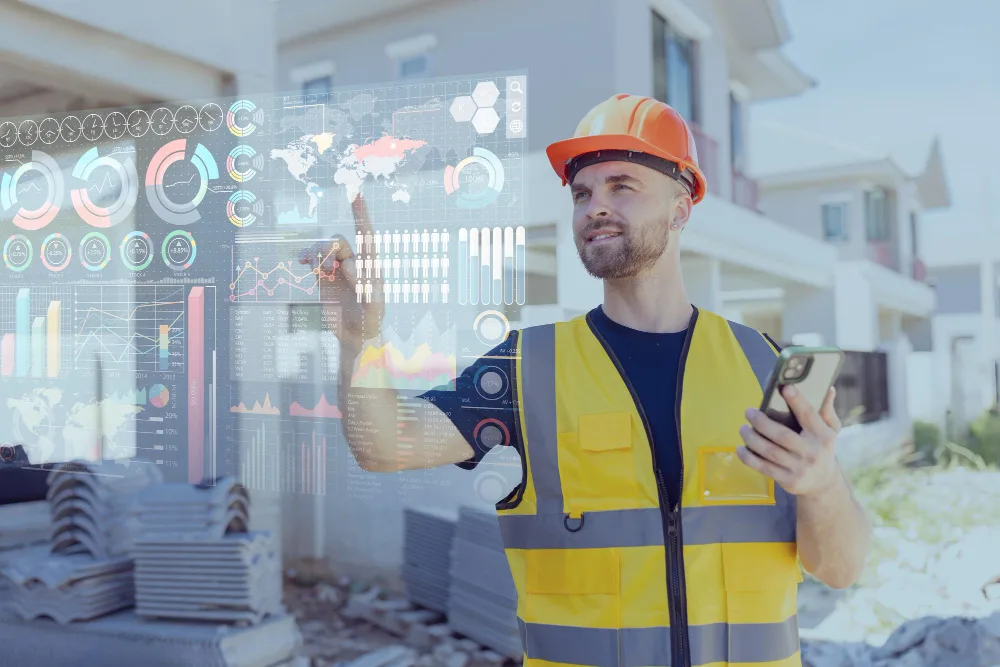

AI in Construction: Benefits and Opportunities
Construction is all about tight management of budgets, timelines, labor, and materials and a mistake in any one of those areas can throw off the whole project. That’s where artificial intelligence comes in: it helps catch issues earlier, plan more accurately, and make decisions based on real data instead of guesswork. It’s no surprise, then, that contractors, project managers, and business owners are turning to AI-powered tools more than ever. In this post, we’ll break down what AI in construction actually means, how it’s already making an impact, and where the industry is headed next.
What Is AI in Construction, Really?
AI in construction works by managing from data like past projects, site conditions, past costs to automate daily tasks and find risks before they become problems. Instead of handling Excel Sheets and reports by manually, project managers can let AI systems identify patterns across datasets in seconds. The objective isn’t to remove project teams, it’s to give them quick and reliable information so they can make informed decisions.

Where AI Actually Moves the Needle
Planning becomes more accurate.
By analyzing actual project outcomes rather than only scheduled plans, AI can recommend timelines and resource allocations that better reflect real-world conditions.

Budgets remain more controlled.
Cost overruns typically have early warning signs within project data. AI tools can identify these indicators before they escalate into significant financial issues.

Administrative tasks are reduced.
Automation of document processing, progress reports, and daily logs allows project teams to focus on decisions that require human judgment.

How Teams Are Using It Today
AI applications differ based on the user’s role:
Project managers look for an AI to catch scheduling clash before they cause delays.

Estimators use AI to develop cost projections based on past data, instead of depending on experience and intuition.

Site managers leverage AI-powered cameras and drones for progress tracking and safety inspections.
Leadership team use dashboards that reduce budget, schedule, and performance data into one view.

Maintenance teams use predictive tools to catch equipment failures before they cause downtime.

Where the Opportunity Is Headed
The primary shift here isn’t automation on its own, but good connectivity. As advance AI tools, they’re getting woven into BIM, ERP systems, and project management platforms rather than existing as standalone add-ons. That means office teams and field crews are finally working from the same real-time data, rather than making decisions based on outdated information. Companies adopting these tools now aren’t just saving time in the short term. They’re also building up a track record of historical data and refined workflows, which pays off later through more accurate forecasting on future projects.

How Proxsoft Fits In
At Proxsoft, we help construction companies modernize without letting technology disrupt core operations. Our services include project management support, reporting, ERP integration, and automation tailored to the specific needs of construction teams, rather than offering generic solutions.
Looking Ahead
AI in construction isn’t just a passing trend anymore; it’s becoming an important part of the construction industry. Companies that create AI into their core operations, instead of treating it as a side experiment, will be in a much stronger position to handle resource shortages and increasing costs down the road. Technology its important part and how it’s applied to projects matters just as much. add the right tools with genuine industry know-how, and AI stops being an abstract idea, it starts showing up where it counts: fewer delays, tighter budgets, and safer job sites.